Menu


Appropriations are among the most consequential actions Congress takes each year. Over the past week, agreement on critical solar manufacturing provisions in the bipartisan and bicameral FY2026 appropriations bills (known as the “minibus”) represents a meaningful step forward for domestic solar manufacturing and American energy dominance.
The bills, which fund the Department of Energy, General Service Administration, and Department of Commerce, among other agencies, are expected to become law. These provisions would:
The bill text and accompanying committee report language include several significant outcomes advanced by the Solar Energy Manufacturers for America (SEMA) Coalition described below.
Preventing US Government Contracts for Chinese Solar
The Financial Services and General Government bill advances federal procurement policies that support U.S.-manufactured solar technologies. The bill would prohibit the General Service Administration (GSA), the federal government's contracting arm, from buying from a "foreign entity of concern" (Chinese company) that manufactures solar modules. Additionally, GSA is urged to provide a preference for procuring electricity from domestically manufactured solar modules. Though a requirement for the government to only purchase power from non-Chinese solar is needed, this represents a major step forward. As the single largest consumer of electricity in the United States, the federal government has a unique opportunity to leverage its purchasing power to support domestic solar manufacturing and reinforce American energy leadership.
First-Ever Funding Support for Solar Manufacturing
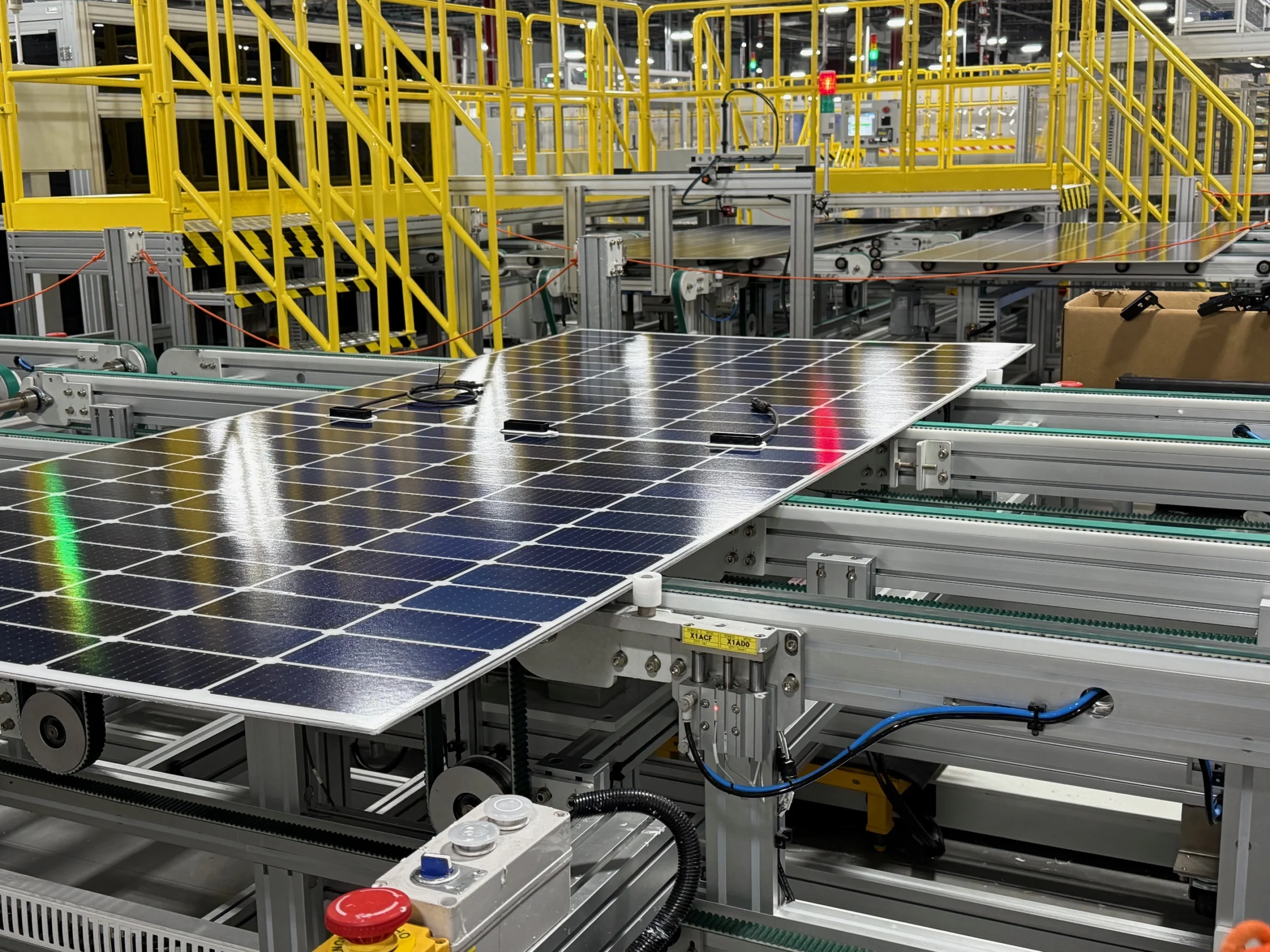
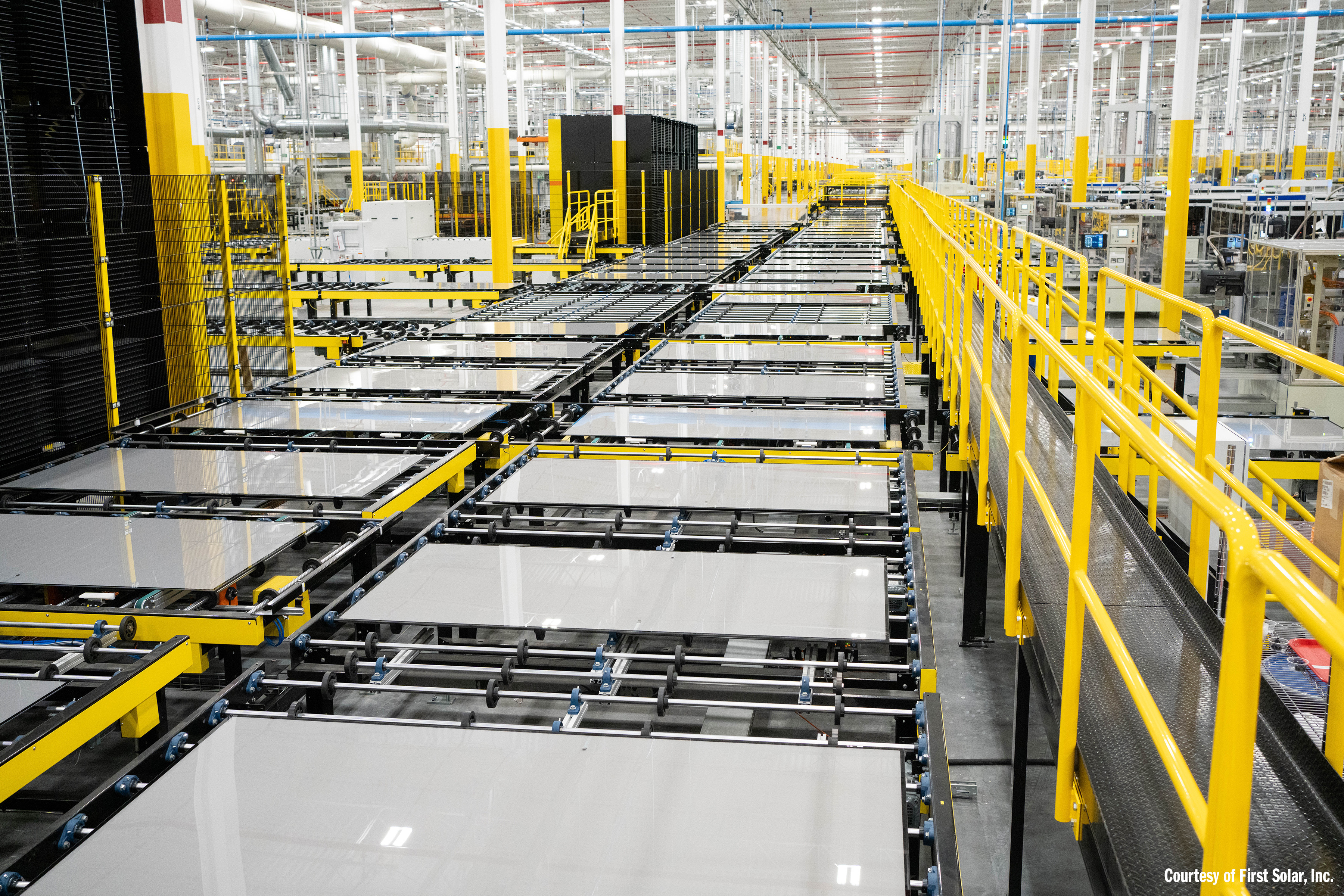
Notably, the Energy and Water bill includes the first explicit appropriations-based investment in solar manufacturing, a milestone for domestic producers and a clear signal that advanced manufacturing is central to U.S. energy leadership and American energy dominance. For the first time, appropriators are not only supporting solar innovation and deployment, but are directly investing in the manufacturing capacity and industrial infrastructure required to build advanced solar technologies in the United States.
The Committee recommends $15 million to accelerate the development of perovskite photovoltaic manufacturing, with a focus on scaling U.S. production capacity, strengthening domestic supply chains, and reducing reliance on foreign-controlled technologies. This funding is designed to help bridge the gap between laboratory breakthroughs and factory-scale production, an area where U.S. manufacturers face intense global competition. The investment is paired with $10 million for perovskite research, development, and demonstration activities.
The bill also urges the DOE to accelerate U.S.-based low-mass space photovoltaic manufacturing, reinforcing the strategic importance of domestically produced solar technologies for space, defense, and other national security applications. Continued funding of not less than $9 million for Cadmium Telluride Accelerator Consortium core activities extends the consortium’s mission and supports collaboration across national laboratories, research institutions, and manufacturers. In addition, $5 million for a competitive solicitation to advance photovoltaic recycling technologies helps ensure that domestic manufacturing leadership extends across the full technology lifecycle, from materials and production through end-of-life management.
Taken together, these provisions represent a more comprehensive federal approach to domestic solar manufacturing, one that aligns innovation, production, and supply chain security in support of long-term U.S. competitiveness and energy leadership.
Strengthening Trade Enforcement and Supply Chain Integrity
The Commerce–Justice–Science bill advances domestic manufacturing priorities by increasing funding for key trade and enforcement agencies and by emphasizing the importance of addressing tariff evasion, forced labor violations, and other trade-related practices that distort markets and undermine American manufacturing workers.
The Committee directs the Department of Commerce to enforce the anti-stockpiling utilization requirement associated with existing antidumping and countervailing duty orders on crystalline silicon photovoltaic products and to report to Congress on the volume of Chinese solar panels imported and stored in the United States during the two year pause of these duties. The SEMA Coalition has long supported aggressive enforcement of antidumping and countervailing duty evasion schemes that undercut American manufacturers.
In addition, the bill allocates no less than $20 million to the Department of Justice’s Trade Fraud Task Force to prosecute violations of the Uyghur Forced Labor Prevention Act, particularly in high-priority sectors such as polysilicon, as well as tariff evasion, transshipment, and related offenses. These resources are critical to ensuring that compliance is rewarded, bad actors face meaningful consequences, and domestic manufacturers can compete on a level playing field.
Looking Ahead
While passage of the FY2026 minibus represents meaningful progress, additional appropriations measures remain forthcoming. The House and Senate are expected to act on the remaining funding bills in the coming weeks, ahead of the January 30 deadline. As those measures are considered and enacted, the SEMA Coalition will continue engaging with appropriators, authorizing committees, and federal agencies to advance these priorities, reinforce congressional intent, and ensure that federal funding, enforcement, and procurement policies work together to support a durable U.S. solar manufacturing base, and strengthen American energy dominance by bolstering domestic solar manufacturing and reducing reliance on Chinese-controlled supply chains.