Menu

America is facing an energy crunch. Global instability, including renewed conflict in Iran, is once again exposing how deeply international dynamics shape energy costs. Meanwhile, at home, skyrocketing energy demand is pushing the grid to the max, prompting backlash to new energy users such as data centers from communities weighed down by energy costs. Our aging grid and energy infrastructure simply is not delivering what our modern economy needs.
In Washington, calls for “American energy dominance” are everywhere. The phrase resonates because it captures something real: a nation that can power its economy, defend itself, and grow its industrial base without relying on adversaries is a stronger nation. As former National Security Advisor Jake Sullivan recently warned, writing off clean energy manufacturing and relying on cheap imports from China would create “a new form of U.S. energy dependence” just as the country has begun to shed its reliance on foreign oil. But too often, the conversation stops at extraction. True energy dominance extends beyond what we extract to how we build, manufacture, and deploy the technologies that power our future. This can and should be done with allied nation supply chains who share our concerns with China.
In reality, energy dominance is a supply chain question. A country that imports the technologies that generate, store, and transmit its power is not dominant. It is dependent. Today, the United States remains dangerously reliant on foreign manufacturing, namely China, for many of the components that increasingly power our economy and our military.
That vulnerability is not theoretical. It shows up in grid reliability challenges, exposure to geopolitical conflicts, and supply disruptions. China has increasingly used export controls as a point of leverage. It also shows up in a hard truth: as electricity demand rises, so does our dependence on the equipment needed to meet it. If that equipment is built in adversary nations, we are importing risk along with it.
China understands this dynamic well. Its sweeping investments in manufacturing and deployment have helped position it to dominate global supply chains by leveraging its subsidy regime and low cost electricity. If the United States fails to respond, we risk a future where not just developing nations, but our own economy, depend on China’s technology to power growth.
This dependence carries real consequences. It creates vulnerabilities to supply disruptions, cyber threats, and geopolitical leverage. It also means forfeiting jobs, economic growth, and the opportunity to build resilient supply chains that can withstand global instability.
Solar manufacturing sits at the center of this challenge.
Too often framed solely as a climate issue, solar is fundamentally an economic, industrial, and national security priority. These technologies are already embedded across military installations, satellites, and critical infrastructure, where they provide resilience and operational flexibility. When they are made by China, we import exposure. When they are made by the United States, we strengthen the industrial base that underpins both economic and national security.
The good news is that when policy is clear and consistent, American industry responds.
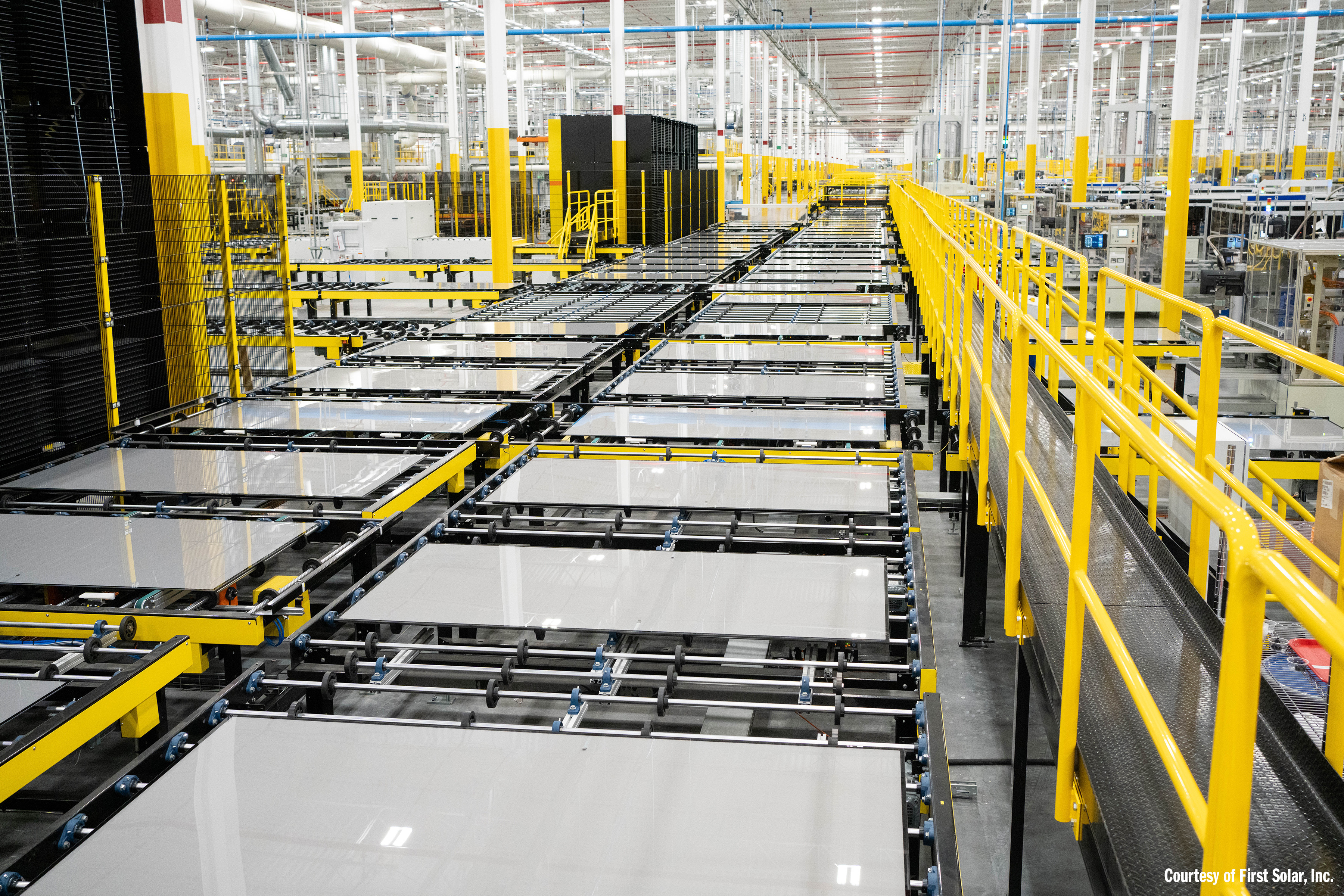
In the past two years alone, companies have invested tens of billions of dollars in clean energy manufacturing across the United States, including major investments in solar. Today, facilities in states like Georgia, Ohio, Michigan and Texas are producing everything from ingots and wafers to cells and modules. These investments are creating jobs, revitalizing communities, and rebuilding capacity that had been hollowed out for decades.
This progress did not happen by accident. Policymakers at every level made the deliberate choice to compete. Tariffs helped counter unfair trade practices. The 45X Advanced Manufacturing Production Credit and Domestic Content Bonus aligned market signals with national priorities. More recently, prohibited foreign entity restrictions from the One, Big, Beautiful Bill Act have begun to draw clearer lines between trusted and untrusted supply chains, though there are open implementation questions.
Together, these policies created something investors depend on: certainty.
Manufacturers invest on decade-long timelines. They build where rules are predictable, demand is durable, and risk is manageable. But that progress is now at risk. Imports from China’s heavily subsidized supply chain continue to undercut American companies and threaten to reverse recent gains. We have seen this playbook before.
Supporting workers with a strong industrial policy agenda is paying off, but it's under threat. Investments are already beginning to slow as federal support has backed off. If our factories fail, we fail our workforce, and it will be by choice. There’s no “invisible hand of the market” at work here. When it comes to modern automated manufacturing, the “natural advantage” countries have is a commitment to providing the state-backed capital and electricity needed to compete at scale, nothing more. Choosing to concede that advantage to adversaries abroad is choosing to fail communities, companies, and our economy at a time when we can least afford to.
Washington now faces a choice. Affordable electricity is the engine that drives our economy and solar is the most affordable and fastest to deploy. It’s essential to building a stronger, more resilient nation that can withstand times like these and continue to power American ingenuity without ceding control to producers half a world away. Washington can treat energy dominance as a slogan tied to fuel production alone, or it can define it for what it is: the ability to build, at home, the full system that powers modern life.
Energy dominance is not declared. It is built on factory floors, in industrial communities, and through policies that reward making things in America. If the goal is a stronger, more independent United States, then American energy dominance must start with American manufacturing.
Mike Carr is the Executive Director of the Solar Energy Manufacturers for America (SEMA) Coalition